



How to Judge Good Knitwear Before You Buy
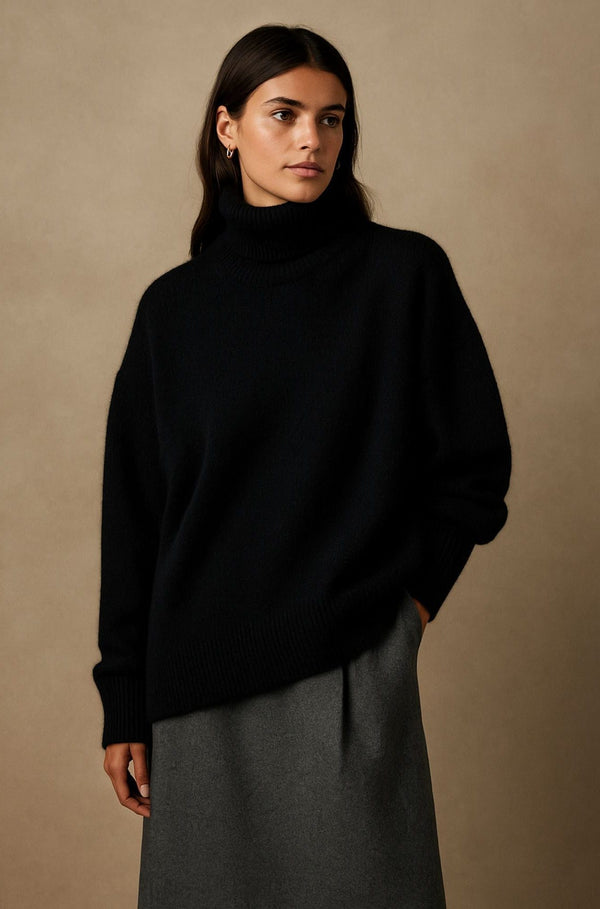
Two sweaters can look identical on a product page and behave completely differently after a month. One holds its shape; the other sags at the cuffs and grows a haze of pills across the forearms. The difference is rarely the fibre name on the label. It is the gauge, the ply, and the way the piece was assembled, and most of it can be judged before you buy.
Read the fibre content, then read past it
Wool, cotton, and cashmere are starting points, not verdicts. A cheap cashmere made from short fibres will pill faster than a good lambswool, because short fibres work loose from the yarn and tangle at friction points. What matters is fibre length and how tightly the yarn is spun. You cannot see that on a label, but you can infer it from weight and density, which is why the next two points matter more than the first.
Weight tells you more than the price
Pick the garment up, or check the stated weight where one is given. A sweater that feels insubstantial for its size has been knitted loosely to use less yarn. Loose knitting is faster and cheaper, and it is the single most common reason a sweater loses its shape. Density is what keeps a shoulder line where the pattern intended it to sit.
Check the ribbing
Cuffs, hem, and collar do the structural work. Stretch a cuff gently and watch it return. Good ribbing springs back immediately and completely. Ribbing that returns slowly, or returns to a slightly wider shape than it started, will be loose within a season. This is the fastest single test there is, and it takes two seconds.
Look at how the pieces are joined
Seams on better knitwear are linked, meaning the two panels are joined loop to loop so the seam has the same stretch as the fabric around it. Cheaper construction cuts the panels and overlocks them like woven cloth, which leaves a stiff ridge that eventually splits under load. Turn a shoulder seam inside out where you can: flat and supple is what you want, bulky and rigid is not.
Pilling is not always a defect
Nearly all knitwear pills a little at first as the shortest surface fibres shed. That settles within a few wears. What is not normal is pilling that keeps producing new bobbles months later, which indicates short-staple yarn throughout. Remove early pills with a comb or a fabric shaver rather than pulling them, since pulling drags the yarn out of the knit.
Care decides the second year
Wash knitwear cool and infrequently, and dry it flat rather than on a hanger, where the weight of wet wool will stretch the shoulders permanently. Fold it for storage for the same reason. Most sweaters need washing far less often than people assume; airing overnight resolves the majority of cases.
If it is not right
Every knitwear page on this site lists the fibre content and the measurements, so you can compare before ordering rather than after. If a piece arrives and it is not what you expected, our Return and Refund Policy gives you 30 days, and the FAQ answers the sizing questions we get most. You can also send your measurements through the Contact Us page and we will tell you which size to take.